Frequently asked questions
Frequently asked questions
What people actually ask us on the phone, answered properly. If your question is not here, call and ask it. We answer live at any hour on both lines.
Call the line for your area
Water damage
How fast should water damage be addressed?
Immediately. The longer water sits, the more it soaks into porous materials like drywall, insulation and flooring, and the more it affects structural components. Delays lead to microbial growth, higher repair costs and more extensive damage. Calling a professional right away is what limits all three.
More on Water Damage RestorationWhat should I do immediately after water damage?
Ensure your safety first. Turn off power to affected areas to avoid electrical hazards, but do not reach a panel you would have to stand in water to reach. If it is safe, move valuables out of the water's path and get furniture legs up off wet carpet. Then contact a restoration service before mold growth or structural damage worsens.
More on Water Damage RestorationHow do you dry walls and floors after a flood?
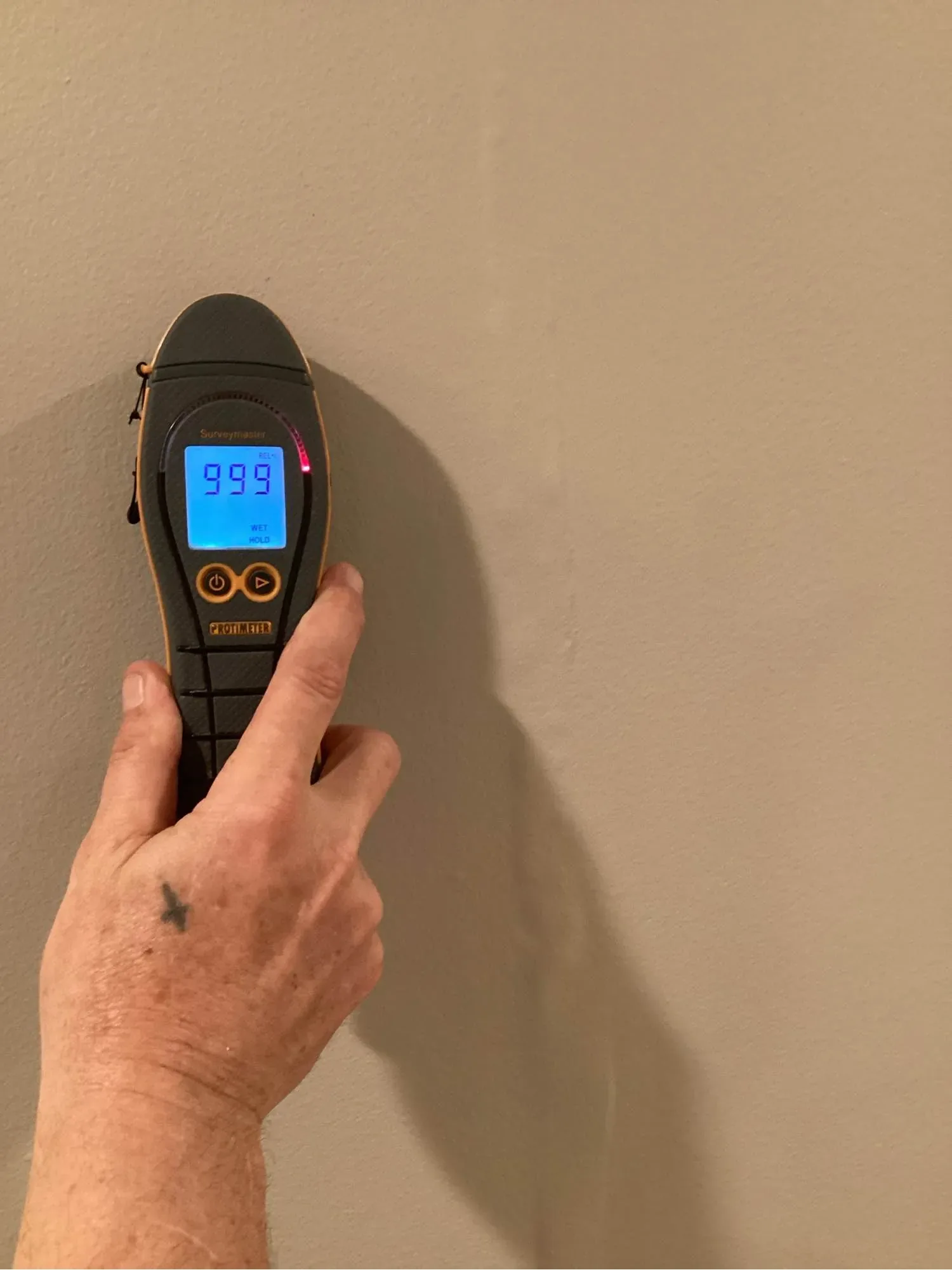
We use industrial dehumidifiers and high-velocity air movers, and moisture detecting equipment to assess the water content in materials so every area is properly dried. In some cases we remove materials such as drywall or carpet where they are saturated beyond drying. The goal is to prevent microbial growth and get the property dry, clean and documented.
More on Water Damage RestorationWill water damage cause mold?
It can, if it is not addressed quickly. Mold typically begins to grow within 24 to 48 hours in damp conditions. Drying affected areas thoroughly and quickly is what prevents it from taking hold, which is why we dry to a measured reading rather than until something feels dry.
More on Water Damage RestorationIs water damage covered by insurance?
That is a question for your carrier, and it is worth asking them early rather than after the work is done. What we do is document the loss properly from the first visit, photographs, daily moisture readings and a line-item estimate in the format adjusters expect, and communicate directly with your adjuster. We do not interpret policies or tell you what yours covers.
More on Water Damage RestorationMold
Is mold dangerous to my health?
Mold can be harmful, particularly to people with respiratory conditions, allergies or weakened immune systems. Exposure can lead to coughing, sneezing, headaches and skin irritation, and in more serious cases can worsen asthma or lead to infection. We are a restoration company rather than a medical one, so for a health question about a specific person, speak to a doctor.
More on Mold Removal and RemediationWhat causes mold to grow in homes?
Mold thrives where there is high humidity or moisture, typically from water damage, leaks or inadequate ventilation. It grows on wood, drywall, carpet and similar materials, and is most common in basements, bathrooms and attics. Mold spores are always present in the air; they need moisture to begin growing and spreading.
More on Mold Removal and RemediationWhat is the difference between mold removal and mold remediation?
Mold removal involves physically removing mold from surfaces. Mold remediation is a more comprehensive process that includes removing the mold, addressing the moisture issue causing it, and restoring the affected area to a safe condition. Remediation involves containment, cleaning, and specialised equipment to ensure the contamination is safely dealt with and unlikely to return.
More on Mold Removal and RemediationWhat takes place during a mold inspection?
Our inspections are done by a mold remediation specialist and are strictly visual. We assess visual signs of mold and water damage and use moisture meters and thermal imaging to detect hidden moisture behind walls and under floors. We may need to access adjacent rooms or the spaces above and below the affected area. Afterwards we meet with you to discuss our findings and suggested remediation plans, answer your questions, and set a date for the estimate.
More on Mold InspectionsWhat is the difference between mold testing and mold remediation?
Mold testing involves collecting air and surface samples which are sent to a lab to determine spore counts and identify specific types of fungi. We do not provide mold testing. Where testing is warranted we refer you to an unaffiliated testing or environmental company. We provide visual inspections of the area of concern and remediation work, and we can recommend third parties unaffiliated with us if you decide to proceed with lab testing.
More on Mold InspectionsFire and smoke
Do you clean soot from walls and ceilings?
Yes. Our technicians clean soot and smoke damage from all types of surfaces, using specialised products and techniques recommended by the IICRC to remove soot without causing further damage. This restores the appearance of walls and ceilings and removes the lingering odors that accompany smoke damage.
More on Fire Damage RestorationDo you board up and secure fire-damaged homes?
Yes. We provide emergency board-up services to secure the property, protect it from the elements and prevent further damage or vandalism, including boarding up windows, doors and other openings, and tarping where the roof or an upper floor is open.
More on Fire Damage RestorationInsurance and credentials
Do you work directly with insurance companies?
Yes, we work directly with all major insurance carriers to streamline the claims process. We handle the necessary paperwork and coordinate with your provider for a smooth, hassle-free experience. Our team works with insurance companies including Allstate, Kentucky Farm Bureau, Progressive, USAA, State Farm, Nationwide, Liberty Mutual, GEICO, Farmers Insurance, Travelers, AAA, MetLife and American Strategic Insurance.
What certifications does All Dry of the Bluegrass hold?
We are an IICRC certified firm, which is the industry body that sets the drying and remediation standards, and an EPA Lead-Safe certified firm, which matters on any property built before 1978. We have been BBB accredited since April 2023 and currently hold an A+ rating. The crews doing the mitigation work are our own employees, so the people who show up are the people we trained. If you need specific documentation before work starts, ask on the call and we will go through it with you.
Are you licensed and insured?
Yes, fully licensed and insured. That means we meet the state and local requirements for the services we provide, and you are protected throughout the restoration process. Commercial leases and property managers often ask for evidence of liability coverage and workers compensation before work starts, and we can provide certificates on request.
Are your technicians certified?
Yes, all of our technicians are certified and trained in the latest restoration techniques, with ongoing education to stay up to date on best practices for water damage, fire damage and mold remediation. We are an IICRC-certified firm, and we are also a Lead-Safe Certified Firm by the EPA, which means our technicians follow strict guidelines to protect your health and safety throughout the restoration process.
Do you use subcontractors?
For mitigation and remediation, the cleanup work itself, no. Those crews are vetted, licensed, trained and employed by us, which in a secured or tenanted building matters for access control as much as for quality. Rebuild is different. Like most restoration companies we bring in trusted subcontractors for the rebuild stage, and we tell you who is coming and when rather than leaving you to work it out.
More on Commercial RestorationWorking with us
Are you available 24/7?
Yes, for water and fire emergencies. Our team provides live calls around the clock and aims to be there within the hour throughout Central Kentucky. Mold is assessed during business hours by appointment, because it is not an emergency service in the way a burst pipe or a fire is. We are locally owned and operated, IICRC-certified and BBB A+ rated, and we offer free inspections* and veteran discounts.
Which of your two phone numbers should I call?
It depends where you are, not on what has happened. (859) 780-7419 covers Lexington, Georgetown and Nicholasville. (502) 465-8891 covers Frankfort, Shelby and surrounding areas, and it is also the number on our Google Business Profile. Either one reaches us at any hour, so if you are not sure, call whichever is nearer to hand.
What areas do you service?
We serve the Bluegrass area and surrounding regions, including Lexington, Georgetown, Frankfort, Shelbyville, Nicholasville, Versailles, Harrodsburg, Wilmore, Lawrenceburg, Taylorsville, Carrollton, Eminence. If your town is not on that list and you are nearby, call and ask rather than guessing from a map.
Is the inspection really free?
Yes, during business hours, including in the case where we look and tell you that you do not need us. Some conditions apply, and inspections and estimates must be authorised by the property owner or the management company where one is involved. Call for further information.
Emergency response, 24 hours a day
Emergency restoration response, 24 hours a day
One call gets our technicians heading your way, a free inspection, and your insurance billed directly. Day or night.
Answering now
Answered by local staff, not AI or an answering service.
- We aim to be there within the hour
- Free inspections and estimates*
- Billed direct to your insurer
*Free inspections and estimates are offered during business hours. Some conditions apply; call for further information. Inspections and estimates must be authorized by the property owner or management company.
- We aim to be there within the hour
- IICRC certified firm
- EPA Lead-Safe certified firm
- BBB A+ rated, accredited since 2023
- Locally owned and operated
- 24/7 live calls
- Free inspections
- We bill your insurance directly
- Veteran discounts
- Mitigation crews are our own employees, never subcontracted
 NAT-F274909-1
 A+ rated